
Comedy News Filed 7 May 2026 · 04:19
Mock The Week’s Summer Bonus: What the TLC Comeback Says About Panel Shows in 2026
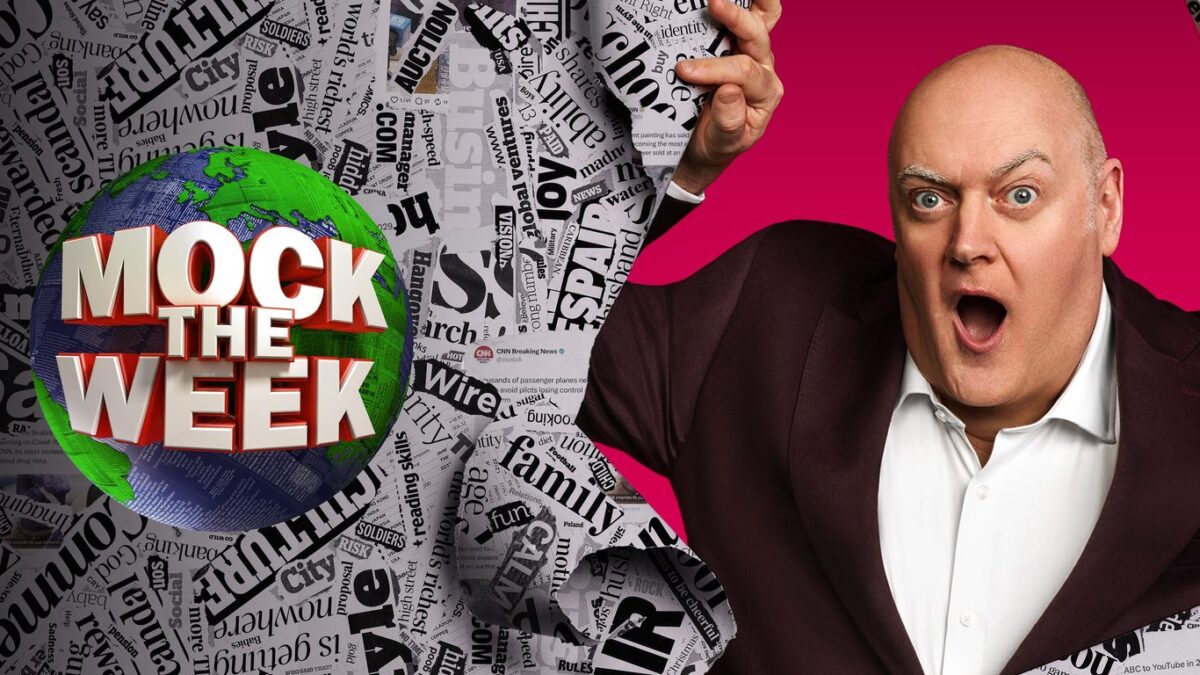
A free-to-air comeback finds extra room
Mock The Week is back for an extra summer run. Warner Bros. Discovery announced on 6 May that TLC will air five new hour-long episodes from Sunday 7 June at 9pm. The show only returned in February, after a four-year break. Now it gets a second batch in the same year. Host Dara Ó Briain will be joined by series regular Rhys James and a rotating bench of guest comedians.
The headline news for working comics: those guest seats are paid bookings on a free-to-air channel with real audiences. Reports cite overnights averaging above 600,000 viewers, rising past a million when repeats are counted. Panel shows on linear television looked endangered a few years ago. This commission says otherwise.
From BBC cancellation to a TLC commission
The original Mock The Week ran 21 series on BBC Two before being axed in 2022. The reasons cited included the cost of topical comedy and a drift to younger audiences online. TLC, owned by Warner Bros. Discovery, picked up the format in late 2025 with Angst Productions and relaunched it this February. Commissioner Charlotte Reid then ordered the summer bonus run.
Graham Lafferty, SVP Content Strategy and Networks for UK and Ireland at Warner Bros. Discovery, called the new commission “an extra burst” of the show. Ó Briain framed his own return like this in the same announcement, dated 6 May 2026:
“The Prime Minister in trouble, the world running out of oil, and the most chaotic World Cup in history about to start? Well, that sounds like a week worth mocking.”
Dara Ó Briain, host of Mock The Week
Why panel shows still matter to working comics
Topical television is not a replacement for live work. It is something different: a televised audition that pays. A strong four-minute set on a topical round can lift tour ticket sales for months. Tour promoters watch closely. Younger viewers clip the segments and re-share them.
For early-career comics, a single TV appearance is still one of the fastest ways to get noticed. It puts your name in front of a venue programmer who has never heard of you. With Live At The Apollo on hiatus and Mock The Week back, the supply of UK televised stand-up moments has not collapsed. It has reshaped.
What the rotating-guest model signals to bookers
Mock The Week does not run on a closed cast. It runs on rotating guest seats, which means more individual comedians get short, sharp exposure. That is good news for the middle tier: working club acts who have a TV-ready ten minutes, but not yet a full touring hour.
It is less generous to specialists who lean on long-form storytelling. A topical round needs setup, punchline, and reaction inside thirty seconds. Comics who tour rooms like the Banana Cabaret in Balham, which handed over after 43 years, often build slower-burning material. They can struggle on this format, even when the live work is excellent.
The other lesson is the rotation itself. Many of the strongest UK clubs already work this way, holding one MC steady while changing the third-headliner pool. Familiar host, fresh voices, low repeat fatigue. The same logic that books a 200-seat room on a Saturday is now booking a Sunday-night TV slot.
Open Comedy’s take
Our read: the quick second commission is more meaningful than the show itself. It is evidence that a non-BBC, free-to-air home for British topical comedy is commercially viable. That shifts the bargaining position for agents and for working comics chasing a breakout TV credit. There is now a second buyer in the room.
We also think the industry overcorrected when the original was cancelled. The “panel shows are dead” narrative was always thinner than it sounded. What had actually died was the cheap version: 30-minute shows on tight budgets, paying low fees, leaning on the same five faces. The TLC version runs an hour, books rotating guests, and trades on news cycles big enough to fill the runtime. That is a healthier product, not a nostalgia rerun.
The contrarian take we keep coming back to: televised stand-up is not collapsing in the UK. It is spreading across more outlets. We saw the same pattern when Gorilla Comedy+ launched its streaming service and when the BBC Comedy Festival rotated to Liverpool. Comics who plan a year around a single broadcaster are missing the point of 2026.
Risks and trade-offs for performers
Panel shows reward a particular performer profile. Comics who do well tend to write fast, react fast, and bring a clear voice to a stranger’s punchline. Comics whose strength is a 75-minute show built around one thesis often struggle when they walk into the studio cold.
The risk for an early-career comic is treating one good appearance as a career arrived. It is not. It is a foot in the door. The career still gets built across club spots, festival runs, an hour at the Edinburgh Fringe, and the slow grind of a self-produced tour. The same applies to veterans, like Lenny Henry’s first stand-up tour in 16 years. Television exposure helps fill the room. The room still has to be built.
Key takeaways
- Panel shows are still alive on UK television, but the centre of gravity has moved off the BBC. TLC’s quick second commission is the proof.
- For working comics, a Mock The Week guest spot is an audition with a paycheque, plus a likely spike in autumn tour sales. Treat it as a setup, not a destination.
- For venues and indie bookers, the rotating-guest model is a tip on talent pipeline. Watch the Sunday nights and book ahead of any tour rate hike.
FAQ
When does the new Mock The Week summer run start?
Sunday 7 June 2026, at 9pm on TLC. The run is five hour-long episodes, produced by Angst Productions.
Who hosts and who is the regular?
Dara Ó Briain hosts. Rhys James returns as series regular. Other comedians rotate as guests.
Why did Mock The Week move from BBC Two to TLC?
The BBC cancelled it in 2022. Warner Bros. Discovery’s Charlotte Reid then commissioned a revival, made by Angst Productions, which launched on TLC in February 2026.
Are panel show appearances still useful for early-career comics?
Yes. A clean five-minute moment can lift ticket sales for an autumn tour. It also signals to club bookers nationally that you are ready for a bigger spot.
How does this compare to streaming for exposure?
Free-to-air linear TV still reaches a wider casual audience in one night than most streaming releases reach in a week. The two routes do different jobs and a smart comic plans for both.
