
Comedy News Filed 28 Sep 2026 · 10:34
The BBC Re-Edited a Katherine Ryan Joke Out of iPlayer Nearly a Year Later
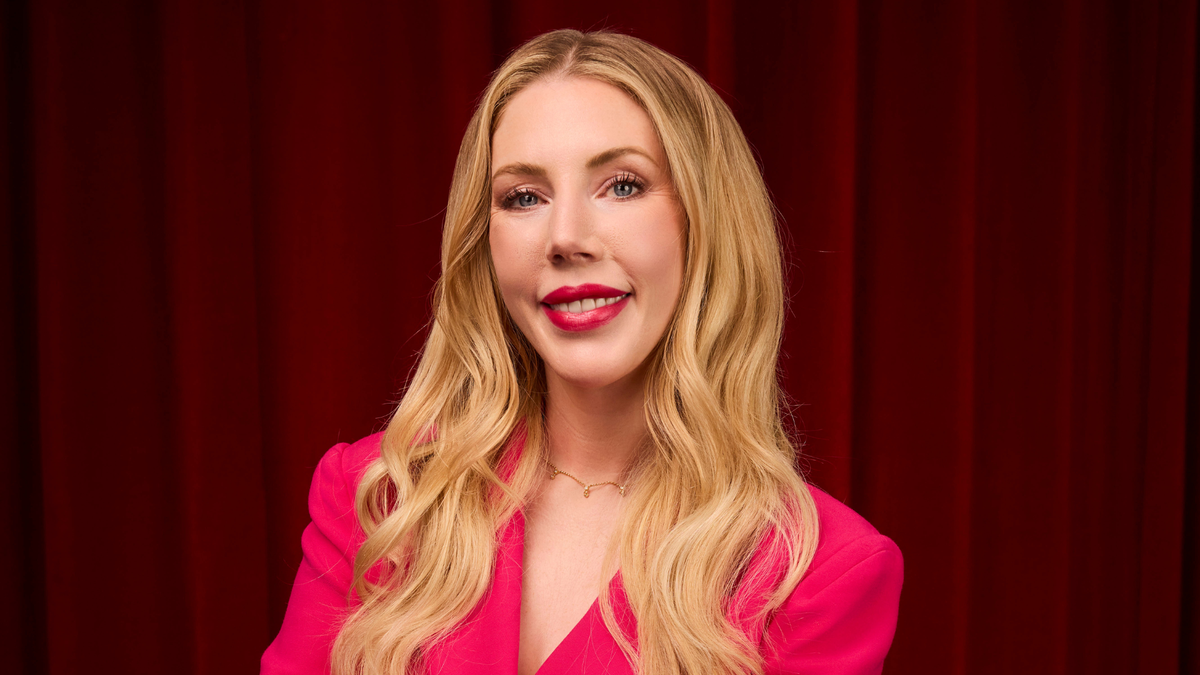
“I don’t know that we are allowed to broadcast the C-word, but you did reference Victoria Beckham earlier and we’ll allow that.” Katherine Ryan said that guest-hosting Have I Got News For You on 7 November. It went out after the watershed, on an episode that carried a warning about very strong language. Two people complained. The joke is no longer in the version of that episode sitting on BBC iPlayer.
The episode itself is still up, but the file sitting behind that title is not the one that went out on 7 November. The BBC’s published finding, as reported by Attitude, says “BBC Content management replaced the version of the episode on BBC iPlayer with an edited version.” Compliance cleared that line at the time and it aired after nine o’clock behind a language warning, and most of a year later somebody swapped the file with the performer nowhere near the room.
The broadcast credit that bookers, agents and commissioners actually watch can be re-cut after the fact. A set airs, then gets trimmed for the player, and the version sitting there months later is not the one that went out. The clip on your showreel may end up outliving the broadcaster’s copy of it.
What is the BBC’s Executive Complaints Unit?
It is the BBC’s own final stage of complaint handling, run in-house, with no regulatory powers. The name suggests a unit that investigates executives, which would be a better programme. It sits inside the corporation and reviews cases the first-stage complaints team has already answered. Ofcom is the separate external body, and Ofcom did not decide this one. The ECU’s test is set out in the finding itself.
“The relevant BBC editorial guidelines do not require programmes to avoid giving offence but do require that any offence should be editorially justified.”
Under that test a programme can give as much offence as it likes, as long as it can show what the offence was doing there.
The unit found justification for one half of the segment and not the other. PinkNews reports the run-up was a discussion of David Beckham’s knighthood. It took in a 2013 private email in which he allegedly used the word about the honours committee. On that half, the ECU wrote:
“The inclusion of the c-word in the programme derived editorial justification from David Beckham’s alleged use of it and the satirical reflections this prompted.”
On the swerve onto his wife, it wrote this.
“However, there was no such justification for a comment which presented Victoria Beckham as equivalent to a particularly offensive word.”
Jimmy Mulville, who founded Hat Trick Productions and makes the programme, was not gracious about the process. He noted that two members of a six-million audience took offence, triggering a year-long investigation. The unit, he told Deadline, is one “whom we’ve never met and sounds like something out of Kafka”. He called the investigation “a total waste of the licence fee” and “another example of the BBC’s paranoia about causing offence”. He added that the show “is set up to be comically and intentionally offensive”. That last phrase reads like a watertight defence right up until somebody reads it back to you across a table with a folder open in front of them.
Eleven Mitchell and Webb sketches went the same week
Days before the ruling landed, the BBC put That Mitchell and Webb Look back on iPlayer for the show’s 20th anniversary. Eleven sketches were left off it, including a self-referential bit about blackface performed in blackface. The corporation’s line was short. In consultation with the programme makers, it said, it had included “the ones that still work today and not the ones that don’t”. Working out which eleven is homework for anyone who still owns the DVDs. The series originally ran from 2006 to 2010. The version a new viewer finds on iPlayer today is a curated cut of a programme that once existed in full. We covered the Mitchell and Webb iPlayer cuts when they happened.
John Cleese has never let a BBC editorial decision pass without comment. He posted on X: “If the BBC could prioritise making great programmes ahead of social engineering they might be worth the licence fee.” Two different parts of the same organisation made those two decisions, a week apart, for entirely different stated reasons, so welding them into a single policy would be lazy. A performer with a credit in either show is still left with the same practical fact, which is that somebody else has the master and nobody rings to say they are opening it.
None of this makes broadcasters uniquely villainous. They are also the ones still commissioning, in a market where Channel 4 has folded comedy into drama and cut 340 jobs. Fewer slots, more editorial nervousness around each one, and the same number of comics ringing up about them.
Ryan’s own answer: she had been backstage with a 10-day-old baby in November
Nobody sanctioned Ryan, and the finding went against the programme. Her response was voluntary and posted to her own account. She said she had been in the building with a 10-day-old baby. Ten days old is the stage at which nobody in the house has had four consecutive hours of sleep, which is a novel condition in which to host a topical panel show. Victoria Beckham messaged her about the remark afterwards, and she had apologised unreservedly. “Sometimes the jokes don’t land. And sometimes I sound sarcastic when I’m apologising, but I really am sorry,” she said.
Worth being precise about who did what here, because a lot of the week’s coverage blurred it. The two complainants were viewers. Beckham’s message to Ryan was private and separate. The apology came from Ryan, unprompted, on Instagram, not from any process. The only party that actually changed anything on a public platform was the BBC, and the thing it changed was a file on iPlayer.
Keep your own copy
The practical bit is dull enough that it will never get its own panel at a comedy industry conference. If a broadcast credit matters to your career, do not treat the broadcaster’s iPlayer copy as the archive. Clips get re-cut, anniversary releases get curated, and compliance rulings can arrive most of a year after the tape went out. Within whatever your contract allows, have your own record of what you did, when, and in front of how many people. Nobody is suggesting you breach an NDA to get it; ask your agent what you are entitled to hold and hold that.
This is part of why the self-owned route keeps looking less eccentric than it did three years ago. Josephine Lacey self-funded her own special at Top Secret and put it out herself. The Runcorn podcast now doing Apollo-shaped shows on YouTube is not waiting for a commissioner’s blessing either. Neither route pays what a BBC One credit pays, and both leave the master on a hard drive the performer can actually find.
The oddest detail is the arithmetic, which nobody at the BBC appears to have found odd. Two objections, from an audience Hat Trick puts at six million, triggered a process that ran until Ryan’s baby was old enough to walk. What came out of it was one video file swapped for a slightly shorter video file, and a viewer pressing play tonight who will never know there was a gap.
Sources
- Attitude: BBC upholds complaints about Victoria Beckham joke on Have I Got News For You
- PinkNews: What Katherine Ryan said about Victoria Beckham on BBC as complaint upheld
- Deadline via Yahoo: Have I Got News For You producer on the BBC investigation
- HuffPost UK: Katherine Ryan reacts to the BBC’s ruling
- NME: Mitchell and Webb sketch removed from BBC platforms
- Deadline via Yahoo: John Cleese accuses the BBC of “social engineering”
