
Comedy News Filed 22 Apr 2026 · 09:31
Indie Comedy Venues Thrive While Chains Consolidate in 2026
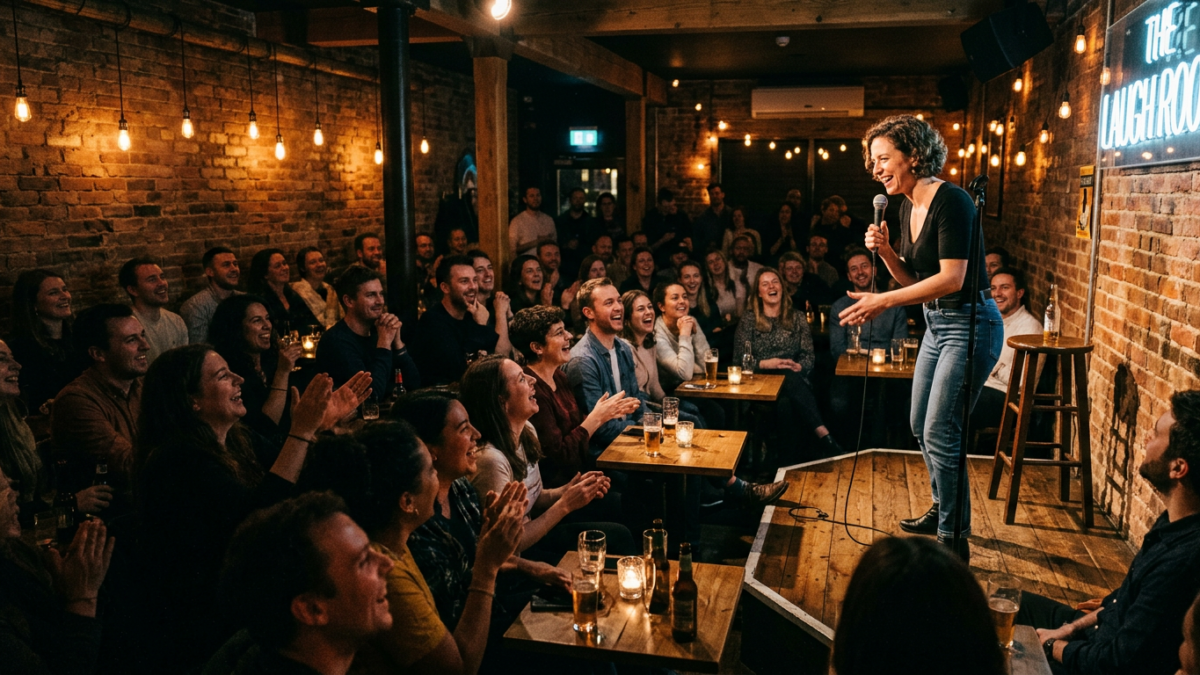
The Indie Comedy Venue Economy: Why Small Clubs Are Winning
If you own a comedy club in 2026, you’re watching a seismic shift. Independent venues are booked solid. Chain comedy clubs are closing locations or cutting shows. The economics have flipped.
This isn’t luck. It’s a direct result of how audiences, comedians, and venue operators have recalibrated post-pandemic. Understanding why indie venues win gives you a roadmap to success, whether you’re starting out or defending your territory.
The Death of the Comedy Club Assembly Line
Ten years ago, comedy club chains ruled. Standardized seating, identical lineups rotating through markets, predictable ticket pricing, high overhead. The model worked when venues were scarce and audiences accepted “whatever’s playing tonight.”
That model is dead.
Chains carry fixed costs that indie venues don’t. Rent on corporate-selected real estate. Staff trained for corporate standards. Marketing budgets that support the brand, not the individual venue. When foot traffic drops, chains feel it instantly because they can’t adapt.
Indie venues have one advantage: they can pivot overnight. Different promoter tonight? Done. Lower ticket price to fill the room? Nobody needs corporate approval. Cater to local comedians instead of touring headliners? Your regulars will fill seats.
The Secret Weapon: Community
Walk into an indie comedy venue and you notice something chains can’t replicate: people who actually belong there. The bartender knows your drink. The host remembers your name. The owner books the opening acts you want to see.
That’s not nostalgia. That’s competitive advantage.
Local comedians book indie venues first because they get real promotion, fair money, and a shot at growing their audience. Audiences come because they trust the venue to deliver a night tailored to their taste, not a corporate algorithm.
Chains book touring acts and hope audiences show up. Indie venues build audiences and touring acts want to play there. That’s the flipped dynamic.
The Math: Where Indies Win on Overhead
Here’s where venue economics get specific. A typical comedy club chain spends 35-40% of revenue on venue costs (rent, staff, utilities, corporate fees). An indie venue in the same market pays 18-25%.
Why the difference?
Chains lease expensive real estate in high-traffic areas because their model requires constant traffic. Indie venues often operate in secondary locations with lower rent but deep community roots. Chains hire managers, shift supervisors, and corporate-approved staff. Indies hire the owner and 2-3 skilled bartenders.
That 15-point overhead advantage means an indie venue needs 40% less revenue to break even. When room capacity drops, indies survive. Chains restructure.
Why Touring Comics Are Embracing Independent Venues
The touring comedian’s experience has changed. Chain clubs offer guaranteed money but brutal conditions: you’re one of six shows that week, the audience didn’t come for you, and the room takes a cut of merch and drink minimums.
Indie venues offer something different: real promotion, smaller crowds you can connect with, merch that actually sells because people are there for you, and venue owners who care about your career, not just your draw.
A touring comic making $1,500 at a chain venue after costs breaks even. The same comic at an indie venue making $800 but with $300 merch sales and a genuine fan connection? That’s a better business outcome long-term.
The Local Show Economy
Indie venues have discovered the goldmine that chains overlooked: local comedy nights are more profitable than trying to compete for touring acts.
A touring headliner takes 50-60% of ticket revenue. A local show with the owner, a booker, and three locals take 15-20% of revenue combined. The room margins are tighter on ticket sales, but the drink sales are stronger (people stay longer, relax more) and the venue builds a loyal base for other nights.
Chain clubs require touring talent to justify the overhead. Indie venues thrive on local talent because the math works.
Technology Doesn’t Favor Scale Anymore
For decades, size meant efficiency. Big venues could buy group insurance, negotiate vendor deals, and share marketing costs across locations.
That advantage is gone. Ticketing platforms (Eventbrite, SimpleTicket) are cheap at any scale. Social media targeting is available to anyone with $100. Email marketing tools cost the same for a 500-capacity room as a 2,000-capacity chain.
An indie venue with 100 followers can run a more effective social campaign than a chain with generic corporate messaging. The technology that was supposed to favor big players instead rewards specificity and community connection.
The Mental Health Factor
This is quiet, but real. Comedians and audiences burned out during the pandemic. When venues reopened, people didn’t want polished, corporate, assembly-line comedy experiences. They wanted spaces that felt real.
Indie venues deliver that. Chains still offer the old experience, which now feels hollow.
What Indie Venues Need to Win
If you’re running an indie venue, you already have advantages. But execution matters.
First: Build a consistent local show. One night a week, same comics, real promotion. Make it the place to be for comedy in your city.
Second: Treat touring acts like partners, not inventory. They’ll come back, bring friends, and actually promote your room.
Third: Know your community. Are you a venue for 21-35 comedy fans? 40+ regulars? Diverse audiences? Double down on that identity.
Fourth: Track your economics. Know which shows generate profit, which nights pull reliable crowds, which drinks move volume. Chains have data. Indies have intuition. Combine both.
What Chains Are Learning (Too Late)
Some chains are trying to evolve. They’re adding local showcase nights, reducing touring acts, and giving individual venues more autonomy.
It’s the right instinct, but it comes with structural problems. A corporate venue operator can’t pivot as fast as an owner-operator. Licensing agreements lock them into expensive real estate. Hiring rules prevent them from being nimble.
The best chains will survive by becoming functionally indie, which means losing the advantages of being a chain. It’s a race they can’t win.
The Future: Indie Consolidation, Not Chain Growth
The future isn’t independent venues replacing chains one-for-one. It’s independent venues consolidating into loose networks.
Imagine 8-12 owner-operated venues in different cities, keeping independent operations but sharing booking connections, knowledge, and occasional promotions. That model has all the advantages of scale with none of the corporate overhead.
Chains can’t execute this because it requires decentralized decision-making. Indie venues can, and they will.
The Bottom Line
Running a comedy venue in 2026 is cheaper and more viable for indie operators than it’s ever been. Your overhead is lower. Your audience expects authenticity, which you naturally provide. Your comedian network strengthens faster.
The economics reward the small, nimble, community-first approach.
If you’re thinking about opening a comedy venue, or wondering why your indie venue is thriving while nearby chains are shrinking, now you know why. You’re not competing on the old rules.
You’re winning on the new ones.
Key Takeaways
- Indie venues run 15-25% overhead; chains run 35-40%. That gap determines survival in slow periods.
- Local comedy nights are more profitable long-term than chasing touring acts.
- Technology democratized the tools chains relied on; scale is no longer an advantage.
- Comedians and audiences want authentic community experiences, not corporate polish.
- The future is indie networks, not chain consolidation.
Sources and Further Reading
- Nightlife Industry Trends 2026
- Nightclub Profitability Analysis
- Comedy Circuit: Venue Operations Guide
- Event Industry Trends Report
Frequently Asked Questions
Q1: What’s the minimum overhead for a small comedy venue?
A tight indie venue can operate at 18-22% overhead if you own or control the space and keep staff minimal. Most successful indie venues aim for 25-30% to allow for growth and flexibility.
Q2: How many local shows should a new venue run per week?
Start with one consistent night (same day, same time each week). Once that’s packed, add a second night. Most successful indie venues run 2-4 comedy events weekly, with touring acts filling gaps.
Q3: Can indie venues compete for touring headliners?
Yes, but not as your primary strategy. A strong local base gives you leverage to negotiate with tour promoters. Start with local comics, build your reputation, then book touring acts selectively.
Q4: What’s the biggest challenge indie venues face?
Burnout. You’re the owner, bartender, promoter, and sometimes the opener. Building a team you can trust is critical to long-term viability.
Q5: Are comedy venue franchises still viable?
Micro-franchises (5-8 locations, one operator or a tight partnership) work if structured like indie networks. Traditional franchises with corporate overhead are struggling.
