
Comedy News Filed 28 May 2026 · 04:19
BBC New Comedy Awards pulls every 2026 heat to Coventry
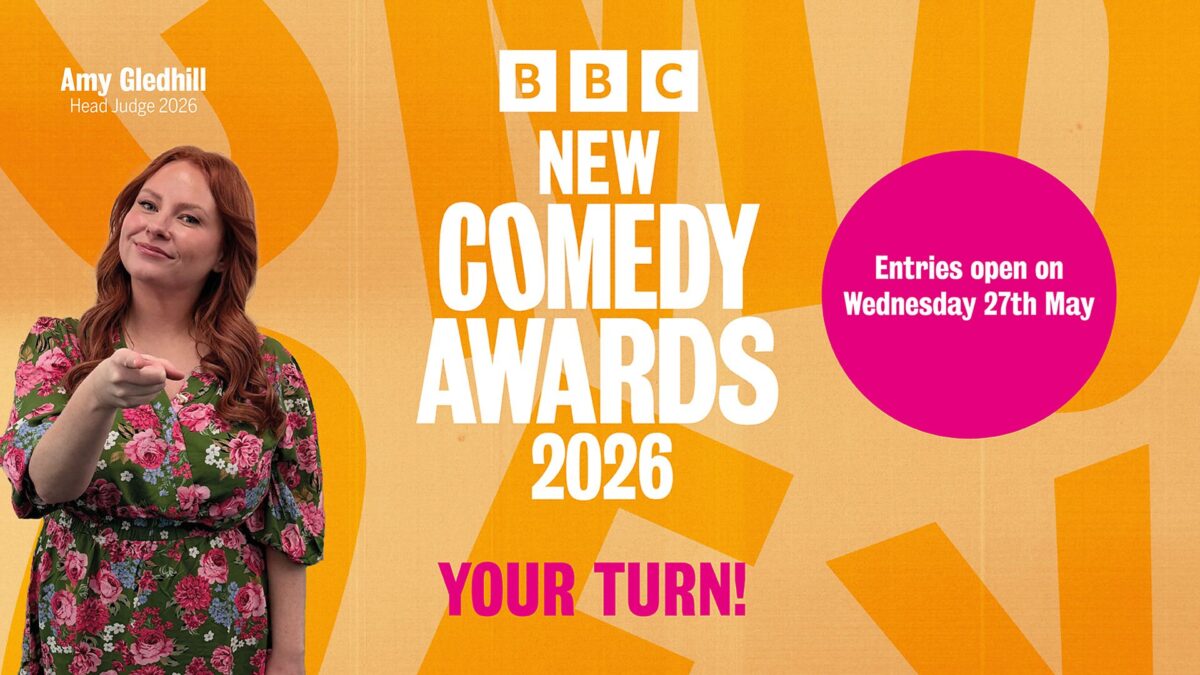
Applications for the BBC New Comedy Awards opened on Wednesday morning, and the geography has narrowed considerably. Every heat in 2026 will be filmed in Coventry across September, with the final at Birmingham Town Hall in October. The application window closes at 11:59pm on 5 July. For a contest that has spent three decades routing crews around the UK – past series have parked heats in Bristol, Bradford and elsewhere – putting the entire qualifying stage in one West Midlands room is a real operational change. The press copy doesn’t quite say so, but every heat this year shares one postcode, one load-in and one car park.
The headline numbers haven’t moved. Winner takes £1,000, a trophy, and a paid commission to write and perform a 30-minute audio pilot with a BBC comedy commissioner attached. Amy Gledhill, who won best show at the 2024 Edinburgh Comedy Awards, is head judge. The producer is Phil McIntyre Television, which has run the show on and off for years. It tends to be more efficient at booking heats than most national tours I’ve watched from the wings.
What the Coventry move actually costs an open-spot comic
If you live in Glasgow or Bristol or Cardiff and you make it through to a heat, you’re now putting yourself on a train (or a six-hour drive) to Coventry, probably twice if you’re invited back for a recall round. Then once more in October if you make it to the Birmingham final. That’s three return journeys at your own expense, against a £1,000 ceiling that you almost certainly won’t see. The previous touring model wasn’t generous either – I’ve watched new-act comics expense a Premier Inn from a £15 travel pot. But it at least put a heat within commuting distance of more applicants. Centralising the heats saves the BBC a chunk of production budget. A Glasgow open-spot who reaches the final is looking at perhaps £200 in advance rail fares before anyone hands them a microphone, and I’ve yet to meet a BBC production budget that quietly reimburses the second-class advance.
None of that makes the prize less worth chasing. The 30-minute audio pilot is the real win. It’s a credit that gets you in the room with commissioners, and the BBC’s pilot rates aren’t bad – I’ve heard mid-four figures for a half-hour comedy pilot. The exact band depends on the slot, and I don’t have a confirmed 2026 figure for this commission. Against that pilot, the £1,000 cash reads as a thank-you note tucked in with the envelope.
Amy Gledhill, and what a head judge actually does
Gledhill’s been quoted carefully in the announcement: Chortle has her saying,
I can’t wait to lead the judging for this year’s BBC New Comedy Awards, it’s such a great initiative.
That’s the standard press-release register. Head judges on these things do a real job, mind – they sit through every heat, they argue in green rooms about whether someone’s character work is the same act they did last year. They generally protect the contest from the kind of safe-bookings drift these competitions slide into when nobody pushes back. Gledhill’s recent run (West End New Act sat in the same week of the calendar last year, for reference) means she’s been in the room as a competitor recently. She was sat backstage at the Pleasance Courtyard with the rest of them in August.
2025’s winner, Eli Hart, was quoted in the same announcement saying,
Winning the New Comedy Awards has changed my life in both big and small ways.
Past winners on the BBC’s wall include Alan Carr, Tom Allen, Lucy Beaumont, Josie Long, Nina Conti and Rhod Gilbert. Peter Kay and Lee Mack were past runners-up. The trophy doesn’t make a career on its own – the careers above had a lot of years of touring after the win – but it does the unsexy job of putting your name on a list that bookers actually look at when they’re filling a TV slot or a festival showcase.
Stand-up has quietly been winning this for years
The BBC is taking entries across stand-up, character, sketch and musical comedy, which sounds inclusive and mostly is, but I’d want to see the judging breakdown before getting excited. Recent years have skewed heavily to stand-up – of the ten finalists across the last two series, I count one character act and one musical-comedy act, with the rest straight stand-up. If you’re a sketch group, the awards’ practical history doesn’t quite back the open-door framing.
The 5 July deadline is tighter than it looks. Most strong applications I’ve seen for these things involve a clean three-to-five-minute video, ideally shot in a real club rather than a kitchen. If you’re filming yours this weekend, the room matters more than the camera – the Leicester Comedy Festival regulars who’ve sat on these panels before will tell you they can spot a Zoom-light setup at twenty paces, and it doesn’t help.
Why Coventry, and not the Glee twenty minutes down the M6
Why Coventry, specifically? The announcement doesn’t explain. There’s no famous comedy room there in the way Brighton, Manchester or Glasgow each have anchor venues, and the West Midlands’ main circuit room is the Glee in Birmingham, twenty minutes down the M6. My best guess is studio infrastructure – the BBC has presence in Birmingham, Coventry has rentable theatre-scale capacity at lower rates than central London or Manchester, and the journey for the production crew is shorter when everything is one venue across one month. Jon Petrie, BBC’s comedy director, said in the announcement,
For more than three decades, the BBC New Comedy Awards have helped launch some of the UK’s most recognisable comedy voices.
Which is true, and also doesn’t answer the question. If you’re a new-act promoter in the West Midlands – the kind of person who runs a Wednesday gong show above a pub – you’ve probably already done the maths on what filling fifteen pre-heat warm-up dates this August might do for your room. The contest doesn’t formally interact with the open-mic circuit, but every year the smarter circuit promoters get a quiet uplift from comics drilling their five for the application tape. Coventry being the centre of gravity this time means that uplift, modest as it is, lands closer to the M6 than usual.
One last thing worth flagging because I haven’t seen anyone else write it down: the BBC’s recent expanded audio comedy ambitions mean a 30-minute pilot is no longer just a one-off Radio 4 slot you do once and then never hear about. The pipeline for short-form comedy audio is wider than it was even two years ago. If the winner’s pilot lands well, there’s now somewhere for it to go that doesn’t depend entirely on Caroline Raphael calling you back.
Applications close 5 July at bbc.co.uk/newcomedyawards, with heats filming in September – and if you’re within an hour of Coventry by car, you’re spared whatever the Premier Inn off the ring road is charging that week.
