
Comedy News Filed 16 Apr 2026 · 02:04
Why Midnight Comedy Shows Perform So Well
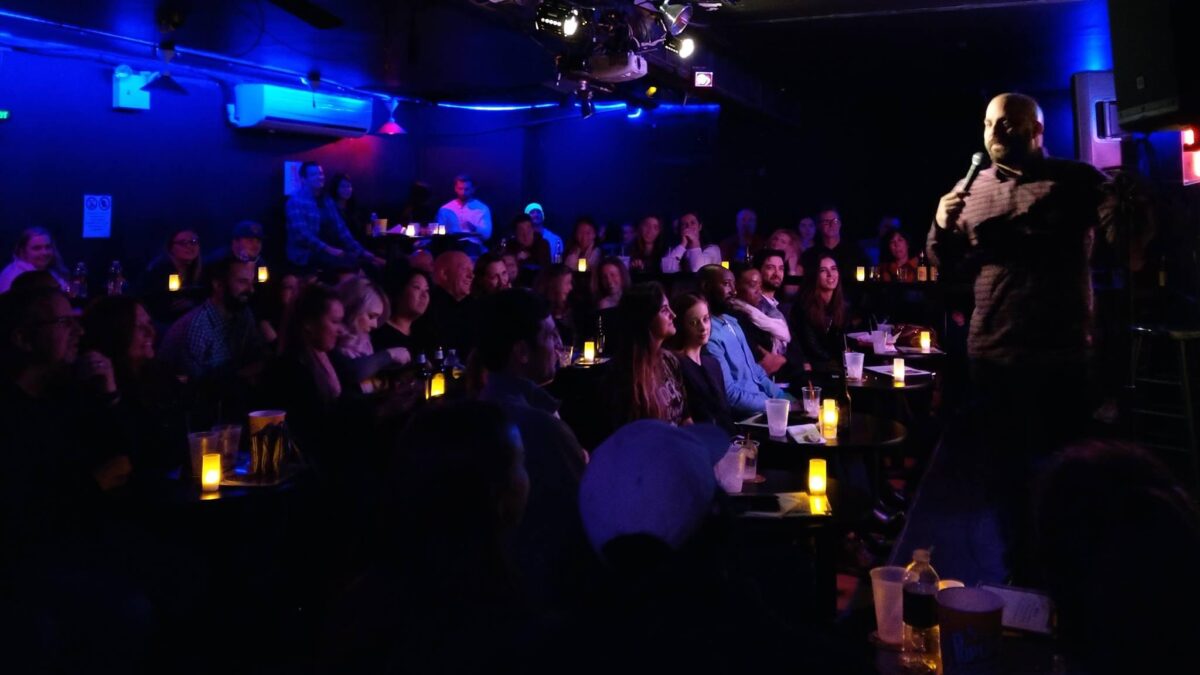
The comedy world’s biggest misconception is that nobody wants to laugh at midnight. Wrong. Late-night comedy shows are quietly becoming the highest-revenue time slots on the calendar. Venues are banking serious money off a trend everyone assumed was dead.
Early or late comedy show: which should you book?
Go late if you want the looser, riskier set. The late crowd has mostly come for the comedy rather than a night out that happens to include it, the acts have usually warmed up on the earlier show, and comics are more willing to stretch out, play with the room and try newer material. Go early if you want a fuller room, an earlier finish and the headliner’s most tested run of material. Neither is better for everyone. The early show suits a first visit or a work night; the late show suits regulars and anyone who has seen the act before.
How long is a comedy show?
A typical club show runs around 90 minutes to two hours: a host, a few supporting acts and a headliner, often with a short interval. Showcase nights and open mics can run longer, because there are more acts on the bill. Late shows are the ones most likely to start a little after the listed time, since they often wait for the early room to clear, so arrive before the start time but don’t be surprised if the first act goes on a bit later.
Why Midnight Comedy Shows Became Goldmines
Venues like The Comedy Store run multiple shows every night, and their late slots fill weeks in advance. These aren’t afterthoughts. They’re fully booked with top comics and pull audiences paying premium prices for midnight comedy.
The shift happened quietly. Post-pandemic audiences rejected traditional theater schedules. A 45-year-old won’t leave at 7 PM. A 28-year-old on late shifts prefers an 11:59 PM show. These audiences have disposable income, commitment, and tip better than daytime crowds. The venue owner who noticed this pattern early gained massive advantages over competitors.
The Pricing Arbitrage Nobody’s Talking About
Midnight comedy shows charge premium per-ticket prices while attracting smaller crowds with higher per-person spending. Your 7 PM show sells 200 tickets at $25 = $5,000 in door revenue. The late show sells 60 tickets at $50 = $3,000. But add drinks, minimums, and tips. Late-night wins by 20-40% on total revenue.
Venues tracking revenue across multiple time slots see 40% of nightly income come from late shows despite lower attendance. The economics heavily favor these times over traditional 8 PM slots. A venue running five shows nightly generates roughly equal revenue from two late shows as from three early shows – with significantly less operational complexity.
Comedian Fallacy: More Audience Time Means Better Gigs
Most comedians avoid midnight comedy slots. They assume a 9 PM show with 300 people beats a late show with 80 people. Wrong. They prioritize exposure over actual income, which is backwards thinking that costs them thousands annually.
Venues pay comedians based on room revenue. If a late show brings $3,500 and 9 PM brings $4,200, the difference is $700. But late audiences tip your opener 30% higher. They self-select for better behavior, genuine interest, and less aggression. This fundamentally changes your working environment.
The real advantage: late comedy crowds have almost zero hecklers. The loud drunk people are gone by 11 PM. You get audiences specifically there for comedy, not just drinks. This changes everything. You can take longer pauses, build suspense, and trust silence will be respected. None of that works at 7 PM.
The TikTok Paradox: Short Content Is Killing Comedy Venues
Social media trained comedians to think in 60-second clips. Every joke must work in 15 seconds. Live venues want the opposite – longer bits with real narrative and callbacks that build over time.
These late-night audiences are older and less social-media dependent. They sit through 45-minute sets willingly because they paid for comedy. TikTok comedians often fail here. A creator with 500k followers might bomb at a $50-ticket show because they can’t sustain attention beyond a minute. Late venues don’t tolerate that problem.
Booking Mechanics: Why Venues Push Late Slots
A typical Comedy Store schedule runs 5-7 shows per night. Earlier slots attract families and couples with children (lower spend). Late shows pull bachelor parties, birthdays, and regulars booking whole tables (high spend).
Venues shifted strategy because customer acquisition costs drop dramatically for late shows. Word-of-mouth about great midnight comedy shows spreads fast among late crowds. A 7 PM show needs Yelp ads and paid marketing. These slots fill through reputation alone. That’s 20-30% reduction in marketing costs per seat sold.
The Category Nobody’s Competing In
Here’s the strategic advantage: every comedy club fights for the same 7-9 PM real estate. Comedians routinely reject 10:30 PM thinking it’s punishment. But clubs that master late-night positioning own their entire markets. There’s almost zero competition.
Open mics run at 7 PM. Touring headliners get 8:30 PM. The late-night special with branded theme and strong comics – that’s where serious money flows. Feature acts who chase those slots consistently report income increases of 25-40% annually. This isn’t theoretical. This is what’s happening at working venues right now.
The Ugly Truth: Your Comedy Isn’t Damaged by Late Hours
Comedians worry audiences are tired at these hours. Wrong. Late crowds are focused, generous, and forgiving of risks. They want new material, not recycled crowd-work they’ve heard before.
Your 8 PM set might kill on volume. Your late show destroys on depth. One gets 300 people laughing at safe material. One gets 60 people locked in, remembering forever. Comedians consistently report their best laughs from late shows. Audience quality is simply higher.
Three Actionable Takeaways for Success
For Venue Operators: If your third show runs at 10:30 PM, you’re leaving serious money on the table. Start testing midnight comedy shows three nights a week with your strongest comedians and a simple branded theme. Track per-seat revenue instead of total attendance. Within 60 days you’ll understand why successful venues run multiple late shows.
For Comedians: Stop automatically rejecting late bookings. If a venue offers 11:30 PM instead of 8 PM, ask what they’re paying before declining. Three nights of paid late shows beats six nights of unpaid open mics. Your material doesn’t degrade at these hours – the audience quality actually improves significantly.
For Booking Agents: Late-night comedy shows represent the fastest-growing revenue segment in club operations. Instead of pitching comedians into crowded 8-9 PM slots, position them for late shows where per-comedian revenue is highest and audience quality is best. Your clients will earn more and have better crowd experiences.
FAQ
Q: Isn’t late-night comedy a dying format?
No. Not at any profitable venue. The Comedy Store runs multiple late comedy shows every single night because they’re genuinely profitable. When you hear “late shows are dead,” that’s coming from struggling rooms – not from venues actually making money in this market.
Q: Will my material play differently at midnight?
Yes – significantly better. These audiences are sober, deeply focused, and genuinely there for comedy. They laugh harder at clever bits and quickly punish lazy material. If your entire act relies on easy laughs and volume, it will feel dramatically weaker here. But if your material has real depth and structure, midnight is exactly where it shines brightest.
Q: How do I convince a venue to book me at midnight?
Simple: ask for the numbers. If they run late shows, ask what those slots gross compared to your pitched time. If late shows make more money, make a case to be on the late bill. Clubs will move strong comedians to wherever the revenue is highest – that’s just business logic.
Q: Is the late-night audience smaller because of economics or preference?
Preference. Fewer people want to be out that late. But those people spend 3-5x more per capita, tip significantly better, and create less operational hassle for the venue. Smaller crowds literally don’t matter when per-head spending triples or quadruples.
Q: Should I build my whole act around late-night audiences?
No. Always build material for paying customers in general. Late-night audiences are currently the most consistent, highest-value segment, but that advantage will eventually shift. What will never change is this: paying customers are always more valuable than people just chasing drink specials.
