
Comedy News Filed 27 Oct 2026 · 07:58
Helen Fielding’s Bridget Jones Prize: Free Entry, 1,000 Words, and One Very Narrow Map
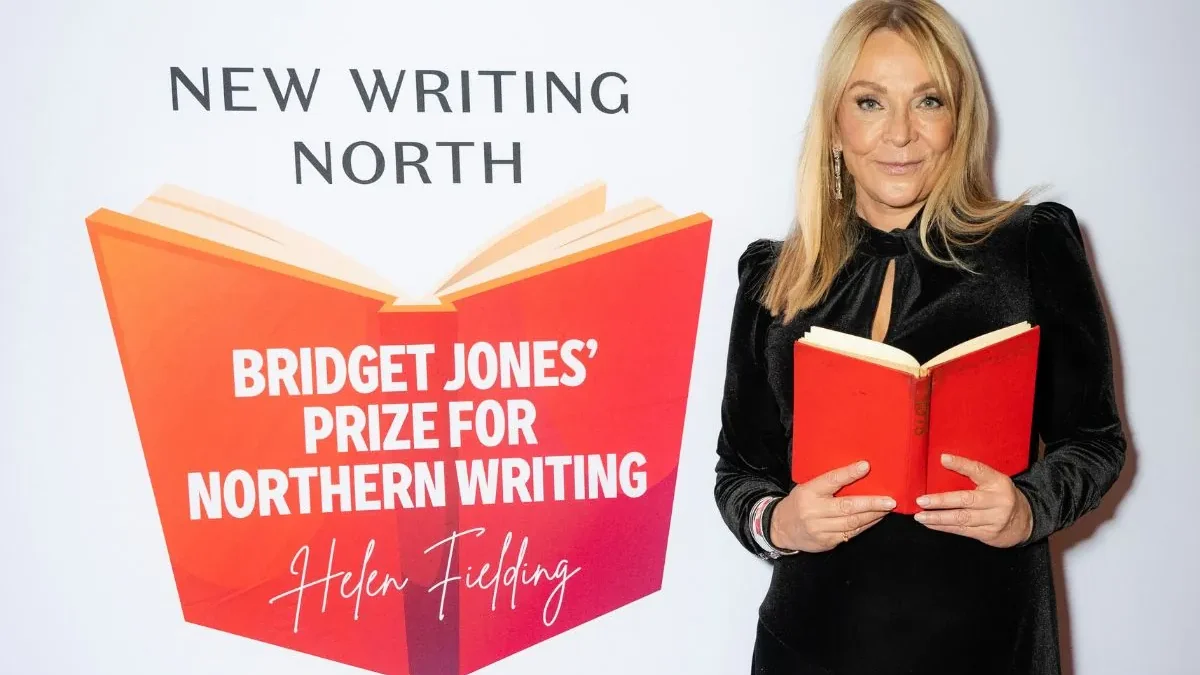
“Just DON’T MAKE IT ANY LONGER!” is, I think, a first for me: a competition rule in all caps, from the person judging it. That’s Helen Fielding, on New Writing North’s prize page, on the word limit for her new Bridget Jones Prize. She softens it on one side only. Entrants who come in a bit short are fine, in her words, “If it’s slightly under you won’t be punished”. But there is no wiggle room upward, and she’s one of the three judges reading the entries, alongside an agent from Aitken Alexander Associates and a representative from New Writing North.
What she wants is 1,000 words. That’s the whole brief. Probably because “Bridget Jones author launches comedy award” is a tidier headline. The accurate one would be “Bridget Jones author launches 1,000-word first-person prose competition for unpublished and un-agented writers”. New Writing North’s own page is specific: the award goes to the “funniest 1,000-word piece of first-person stand-alone prose”. What’s wanted is first-person stand-alone prose, not a script.
Fielding’s reason for the number is nicely unglamorous. “I always tried to make the Bridget columns exactly 1,000 words long”, she says. Anyone who’s written to a count knows how arbitrary it feels and how much of the thing it decides – the shape, the last-line turn, the joke you cut at 1,040 words because it was the only one you could afford to lose.
Who can enter the Bridget Jones Prize, and who can’t
Here’s the plain version, because the eligibility is tighter than the coverage suggested. The award is “awarded to an unpublished and un-agented writer based in the North of England”, per New Writing North. Both halves count: a book deal rules you out, and so does having representation.
The geography is where people will get caught. New Writing North defines the North of England as “the areas covered by Arts Council England in Yorkshire, North East and North West”, so anywhere outside those three is out. Those are the areas New Writing North names: the areas covered by Arts Council England in Yorkshire, North East and North West, rather than anywhere that feels northern on a Friday night. I’d expect a good number of near-miss entries from people who consider themselves northern. They will discover that the funding body disagrees.
Entry is free, which matters more than it sounds. New Writing North states it plainly: “The prize is free to enter and will open for submissions from 23 November 2026 to 1 February 2027.” No reading fee, no registration cost, no agent gate. Free entry is rare enough that it’s the first thing I’d mention to a working writer at the bar, well before the prize money.
When is the deadline?
1 February 2027 at 12pm. New Writing North’s event listing is unambiguous that “the award deadline is 1 February 2027, 12pm (midday).” That’s 12pm midday, so your afternoon has gone along with your evening. New Writing North’s 2027 event listing gives the cut-off as 1 February 2027 at 12pm (midday), not end of day, so this one is a time rather than just a date.
The money: £2,000 to the winner and £1,000 to the runner-up, per New Writing North, with The Bookseller reporting the same figures on 21 October – “£2,000 for the winner and £1,000 for the runner-up”. The winner also gets “a bespoke package of writer support from the team at New Writing North”, and – the bit I’d actually chase – “An advisory session with an agent from Helen Fielding’s literary agency, Aitken Alexander Associates.” For an unagented writer, a scheduled conversation with an agent at a working literary agency is worth more than the two grand, though the two grand will cover a few months of train fares to gigs you’re doing for door split.
Two people get recognised. “There will be one winner, and one highly commended writer,” says the event listing, so only two writers are recognised per round. The panel reading everything is Fielding, an agent from Aitken Alexander and a New Writing North representative – the listing names it as “Helen Fielding, an agent from Aitken Alexander Associates, and a representative from New Writing North.” Three readers. For a free, open-entry, no-credentials-needed comedy prize, that’s a small panel facing what I’d guess will be a very large postbag, but nobody has published an expected entry volume so I’m not going to pretend to one.
Three years, one category, and a word about the timing
It runs three times. New Writing North says “The Bridget Jones Prize will run each year for three years (in 2027, 2028 and 2029)”, and Will Mackie of New Writing North frames it as a first: “This is the first time the Northern Writers’ Awards have featured an award exclusively for comedy writing.” So the Northern Writers’ Awards have an award exclusively for comedy writing for the first time, which, with the prize running in 2027, 2028 and 2029, gives it three winners by 2029 and no track record at all until then.
Fielding’s pitch at the launch, reported on 21 October, was about where the doors are. She said: “There’s much more opportunity in the south than in the north, where I grew up.” She also drew a line between circuit fame and the writers she’s after, noting “There are lots of famous northern comics,” before the part that reads like the actual brief:
But this prize is for the comic voices of people who aren’t famous: just living their lives being quietly hilarious.
– Helen Fielding, at the prize launch
Which is either a generous invitation or the hardest possible instruction, depending on how your week’s going. The “quietly hilarious” voices Helen Fielding described at the launch, in remarks reported by Yahoo Entertainment on 21 October 2026, are not a thing you can bash out on a Sunday night with a glass of wine and a grievance about your landlord. Fielding said the prize is for the comic voices of people who aren’t famous, “just living their lives being quietly hilarious”.
Meanwhile, the BBC welded two commissioning doors into one
The timing is accidental but worth noting. Two days after Fielding’s prize page went up, Televisual reported that “The BBC is to merge its audio and TV commissioning for Comedy, Arts and Classical Music, from the start of 2027.” Televisual says BBC chief content officer Kate Phillips communicated the move to staff in an internal memo, and that it follows further BBC cuts announced the same week.
What a merge means for a writer in practical terms is fewer separate places to send the same idea, and one fewer producer to buy a coffee for. Audio was a genuinely distinct commissioning door from television; from 2027 it sits under one structure.
The difference here is the absence of a filter before the reading. No produced credit, no agent cover letter, no fee, no industry contact who can forward it. You write 1,000 words in first person, you’re in one of three Arts Council England regions, you haven’t been published, and you hit send before noon on 1 February.
Sources
- The Bridget Jones Prize – New Writing North
- Bridget Jones Prize 2027 – New Writing North event listing
- Helen Fielding launches Bridget Jones Prize for northern comedy writers – The Bookseller
- Author Helen Fielding launches award to find the next Bridget Jones’s Diary
- BBC combines TV & audio commissioning for comedy – Televisual
One last practical thing, for anyone running a new-material night in Yorkshire, the North East or the North West, the Arts Council England areas New Writing North uses to define the North of England: New Writing North says the prize is free to enter and will open for submissions from 23 November 2026, and its 2027 event listing gives the award deadline as 1 February 2027, 12pm (midday), so there is a stretch of weeks in between to point people at it. The brief is a 1,000-word piece of first-person stand-alone prose, judged on being the funniest, rather than a script, so it is worth passing on to the comedians you book. Will Mackie of New Writing North says this is the first time the Northern Writers’ Awards have featured an award exclusively for comedy writing, and Fielding ties the 1,000-word limit to the length she wrote the original Bridget columns to: “If it’s slightly under you won’t be punished,” but “Just DON’T MAKE IT ANY LONGER!”
