
Comedy News Filed 25 Sep 2026 · 01:00
BBC Comedy and Liverpool Film Office Open Five Funded Sitcom Script Slots
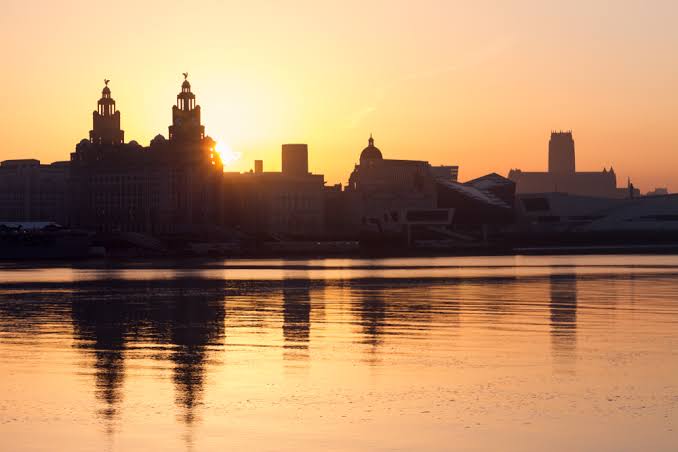
Five funded slots, a Monday deadline in November, and a bouncer on the door. BBC Comedy and Liverpool Film Office want original 30-minute comedy concepts from writers who are from or currently based in the Liverpool City Region. They will commission five scripts for development, and submissions close on Monday 9 November. Then comes the eligibility line that quietly decides who gets through at all: writers must apply with the support of a UK-based production company. Nobody pitches a Liverpool sitcom here on their own.
That one clause matters more than everything else in the announcement. Picture an unrepresented stand-up with a series idea, a laptop and no producer’s mobile number. The funding exists, the five slots exist, and so does the requirement that somebody with a television comedy credit list vouches for you before the BBC reads a word. Worth being precise about where each of those actually sits.
Five Liverpool sitcom scripts, and one gets a taster tape
Liverpool Film Office launched the project on 16 September, inviting original 30-minute comedy concepts. What’s on the table is five 30-minute original comedy script commissions for development, with at least one project singled out for more. Chortle’s write-up the same day spelled out that upper tier. Five projects get development support, with at least one receiving additional support which could include the commissioning of a second script, a table read, or the production of a taster tape or short film.
The taster tape is the one to want. A table read gets you an afternoon in a room with actors and a plate of sandwiches, whereas a tape is something a commissioner can watch on a phone between meetings.
Televisual reported that the BBC is after concepts that showcase a strong and distinctive comic voice
. That sounds like nothing, but in practice it means the reader wants a voice they can’t get from three other writers. The launch quote came from Emma Lawson, interim director of BBC Comedy at the time the release went out:
Liverpool has long been home to some of the UK’s most distinctive comedy voices. Following the success of this year’s BBC Comedy Festival, we’re delighted to be working with Liverpool Film Office to find funny, original stories that reflect the city and region, with the potential to become the next iconic BBC sitcom.
The festival she’s referring to was held in Liverpool in May 2026, the fifth edition after Belfast, Glasgow, Cardiff and Newcastle. Councillor Harry Doyle, the city’s cabinet member for health, wellbeing and culture, added the line that Liverpool’s wit and humour are famous around the world, but behind every great comedy is a great writer
. Fair sentiment, and also, if you’re the writer in question, a sentence you’d quite like to see reflected in a contract.
How do you apply to the BBC Comedy Liverpool script development project?
You apply through a UK-based production company, by Monday 9 November. The submission pack Liverpool Film Office lists runs to four items: a pitch of roughly two pages, a writer biography, a sample script or examples of previous work, and a production company overview setting out the editorial support. Chortle and Beyond The Joke both name the submission address as comedynw@bbc.co.uk. Televisual’s 17 September piece instead pointed readers at the BBC’s own commissioning page rather than quoting an inbox. The BBC’s own brief was not accessible when this piece was published, so we can’t confirm its wording. If you’re preparing a submission, treat the official BBC commissioning brief as the authority on the route, and check it directly before you send anything.
Two pages is shorter than most people’s Fringe programme copy. That’s either a relief or a problem, depending on whether your idea survives being described plainly. The writer biography is where an unrepresented act can actually win something. A list of rooms you’ve headlined and a Radio 4 credit reads very differently to a producer than a paragraph about your influences. Liverpool Film Office also notes that all submissions are shared with the LCR Production Fund for assessment, so this isn’t only a BBC read.
Six weeks to get an indie to open your email
Here’s the clause doing the real work. Beyond The Joke’s report sets out that the attached production company must have a proven track record in television comedy or be working in partnership with a company that does
. It adds that priority will be given to those based in the Liverpool City Region or with a significant presence in the North West
. Read that carefully. You have a writer eligibility rule that is generous about where you live, and a company eligibility rule that is not generous at all about who you know. That gap between doing the work and knowing the people is the one performers keep naming, and a Scottish comedy sector survey this year put a number on it.
A company can sit anywhere in the UK, which means a Merseyside writer is not limited to the handful of indies with a Liverpool postcode. Your Liverpool sitcom pitch is also competing for the attention of London and Manchester producers who get approached constantly (the Salford ones are at least reachable on a Lime Street train, which is more than you’ll manage with a Soho development exec who answers email in March). The window closes on 9 November. The practical move is the same one that works for turning a live show into a tour offer, and we’ve written up how to build a targeted pitch rather than a round-robin. One company, one reason it’s for them, one script attached. Producers tend to read the first line and then open the attachment, which is why the paragraph you sweated over in the middle is mostly for your own benefit.
Worth saying plainly what this isn’t. Nothing in the release promises a broadcast commission. What’s funded is script development, with one project possibly getting a second script, a table read, a taster tape or a short film. It’s one rung, and the rest of the ladder isn’t included. It’s also a rung being added while rungs are coming out elsewhere. Channel 4 has folded comedy into drama, with 340 jobs going, and the promo circuit is thinning after Richard Herring called time on RHLSTP. Five funded scripts out of one city region still counts for something, even if four of them end up in a drawer next to somebody’s unproduced Wirral heist pilot.
If the production company requirement rules you out this autumn, the BBC does run routes that don’t ask for a company at all. Radio 4’s last round commissioned 19 stand-ups and five pilots. That is the part of the BBC that has always been more willing to deal with an act directly. The New Comedy Awards put 30 acts on six free Coventry shows with no producer attached to anything. The £15,000 Comedy Collective bursaries are a different shape again, and four of the ten went to London.
The dates in the launch release don’t line up
One genuine wrinkle. The published timeline states that five projects will be commissioned for development by the end of October 2026. Final script drafts are due by the end of March 2027. That sits awkwardly against a submission deadline of Monday 9 November, since you can’t commission five projects a fortnight before submissions close. It reads like a date that survived from an earlier draft of the brief rather than a trap. But it’s in the launch material on more than one outlet. If you’re planning writing time around a March delivery, you want the actual commissioning date confirmed rather than inferred. Ask when you submit.
The other thing happening in the background is a handover at the top. Chris Sussman was named the BBC’s new director of comedy on 28 August 2026, taking over from Jon Petrie. He said at the time: What a dream job! I’ve loved BBC comedy since I was a young boy listening to tapes of Hancock and The Goons, and the thought of trying to make more classics for a new generation to fall in love with is a daunting but irresistible one.
Which is to say the five Liverpool sitcom scripts will be developed under a chief who wasn’t in post when the scheme was designed. Whether that helps a first-time writer with a strange idea depends on how he feels about strange ideas, and the only public evidence so far is a boy with a Hancock tape, which is half an hour of two men in a bedsit being unpleasant to each other.
