
Comedy News Filed 12 Aug 2026 · 14:52
Count Us In puts nearly 60 overlooked comics on Princes Street
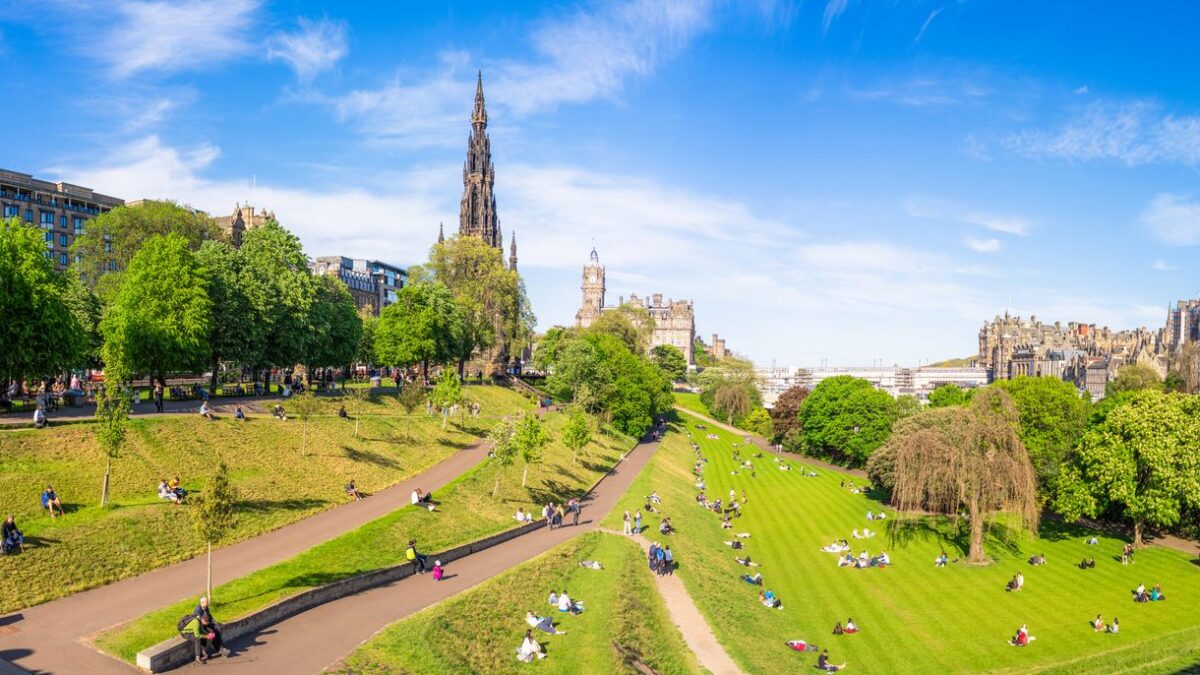
One of the placards on the corner of Princes Street and Hanover Street on Monday afternoon read “hard to find? look harder”. Another read “Count us. Book us. Pay us.” A hired photographer had thirty minutes to get the shot. Chortle put the turnout at almost 60 women, queer, trans and non-binary performers, all of them holding their own show flyers.
The campaign line was “We’re not missing. We’re being missed.” That is a sharper piece of writing than most Fringe press releases manage in August. It was aimed squarely at the people who make lists: bookers, programmers, reviewers, the ones who say every year that they’d love to put on more underrepresented acts if only they could find them. The organisers picked 3pm on the first Monday of the run, roughly the hour when the Royal Mile flyering shift gets desperate. Everyone’s laminate is already curling by then.
Chortle ran three sentences on Count Us In and named nobody. So here is the rest of it.
What is Count Us In?
Count Us In is a visibility campaign and street photocall organised by the comedy collective Bitches in Stitches. It was held at 3pm on Monday 10 August at Princes Street x Hanover Street in Edinburgh’s New Town, postcode EH2 2EL. A backup corner was listed at Rose Street x Hanover Street, EH2 2PJ. It is open to women, femme, non-binary, queer, trans and othered comics performing at the Fringe. The campaign page ran two slogans alongside the photo brief. They were “If they don’t count us, we’ll count ourselves in” and “Done being overlooked. It’s time we were seen.”
The what-to-bring list is the bit I enjoyed most. It’s the only Fringe campaign document I’ve read this year that understands the actual job. It asks for your show flyer, comfortable shoes and water, a friend (optional), and confidence and attitude. Anyone who has spent a Fringe day in the wrong boots knows which of those four is load-bearing.
The photocall element matters more than it sounds. Bitches in Stitches paid for a photographer and brought zine-style placards. Roughly 60 acts walked away with usable press images they didn’t have to shoot themselves against a hotel curtain. For an act on a free or Pay What You Can tier, a decent photograph decides whether a listings editor crops you into the roundup or scrolls past you. The same logic runs through the NextUp award at the Fringe this year, where the trophy gets the coverage and the cheque stays at £500.
The collective that started in Hong Kong
Bitches in Stitches describes itself as a global all-femme/them stand-up collective, founded in Hong Kong in 2021. Chapters now run in Hong Kong, Manila, Manchester and London. Its own numbers: more than 90 performers on the books, over 80 shows staged, and 30 consecutive sold-out shows in the first two years. The UK end is led by Arie David, Natalia Schwartz and Fran Ayala-Rock, and the Fringe show page lists Ayala-Rock as founder.
Their Edinburgh debut, Bitches in Stitches: The New Grrrl Order, runs 10 to 27 August at the Boston Bar in the New Town, EH2 1DR. It plays Monday to Thursday only, 20:15, sixty minutes, strictly 18+, Pay What You Can. The listed line-up is Ayala-Rock (London), Rose Rage (Hong Kong), Alix Brown (Philippines and US) and Arie David (London, and the show’s lead producer). Kate Hu (Hong Kong) and Casey Brander (Taiwan) complete the bill. Mon-Thu is an unusual pattern to take at the Fringe. It hands the weekend to everyone else, and it means the run is 15 performances rather than the 18 or 21 most hours are grinding through. That’s either a scheduling compromise or a mercy, depending on how your voice is holding up by week three.
Ayala-Rock has been unusually open about the stakes. In June she wrote on her Substack about the group’s April teaser campaign, where six of them posted reels cutting fake fringes with clip-in hair. She put the maths in a single sentence:
We had one shot to make the show feel distinctive, or risk it getting lost in the programme pages and spend three weeks performing to an empty room.
The top reel from that campaign passed 12,000 views. The rest landed between roughly 1,700 and 4,800. For an unfunded collective with no ad budget, that’s the whole marketing spend accounted for, and it cost them some clip-on hair.
What a Pay What You Can hour actually returns
Here’s the part nobody puts on a placard. If you sell through the Fringe box office, the Society takes 5% commission plus VAT on ticket sales. The booking fee in 2026 is £1.50 per ticket, capped at £9 per transaction, which works out at six tickets. Under Pay What You Can, punters either buy in advance to guarantee entry or pay what they want at the venue when the show finishes. Advance ticket holders go in first.
So a PWYC act is running two revenue streams with different economics: a small pre-sale that carries a fee and a commission, plus a bucket at the door. That bucket carries neither, but it depends entirely on how the last five minutes went. I’ve watched acts count a bucket like that in a stairwell, separating the coins from the buttons, and it’s about as direct as audience feedback gets. PWYC is also the one Fringe model where 60 new names in a photograph can plausibly turn into bums on seats within 48 hours, because there’s no ticket price to talk anyone out of it.
Set that against the scale of the thing. Fringe 2026 launched with 3,649 shows across 258 venues and 53,884 performances from 71 countries, of which 1,401 are comedy. Against that programme, “we couldn’t find any” says rather more about whoever was doing the looking. It sits alongside the other structural squeezes on acts this year. Only 16 of 402 applicants got the £2,500 Keep It Fringe grant. The official Fringe accommodation at QMU checks out on 30 August, a day before the festival ends.
What the Camden preview looked like
Before Edinburgh, the show previewed at Camden Comedy Club as part of Camden Fringe, with seven comics on rather than the Fringe five. Ayala-Rock hosted, plus Arie David, Alix Brown, Casey Brander, Madeline Fennell, Twinks Burnett and Kate Hu. Everything Theatre’s Faye Elder reviewed it and went straight to how the material was written, which is not where most reviews of a bill like this end up.
It is refreshing to see comedy where other people’s identities and appearances are not the butt of the joke. The comedians restrict such jokes solely to their own experience.
Elder also noted the sets ran without crowd work. In a room that size, where the front row is effectively sitting at the acts’ knees, that’s a decision somebody made on purpose. Subjects ranged across menopause, divorce and colonialism. Whether that hour translates to a New Town bar on a Wednesday with a bucket at the exit is a different question. Nobody will be able to answer it until about the 20th.
The campaign’s ask was three verbs on a bit of card: count us, book us, pay us. Two of those are within a booker’s gift by Friday. The third depends on what people drop in a bucket at 21:15 on Hanover Street. That’s a sentence I’d have flagged as too neat if I hadn’t just read the postcode twice to check.
