
Comedy News Filed 9 Jul 2026 · 14:33
A US tour now starts with a $1,615 visa bill for comics
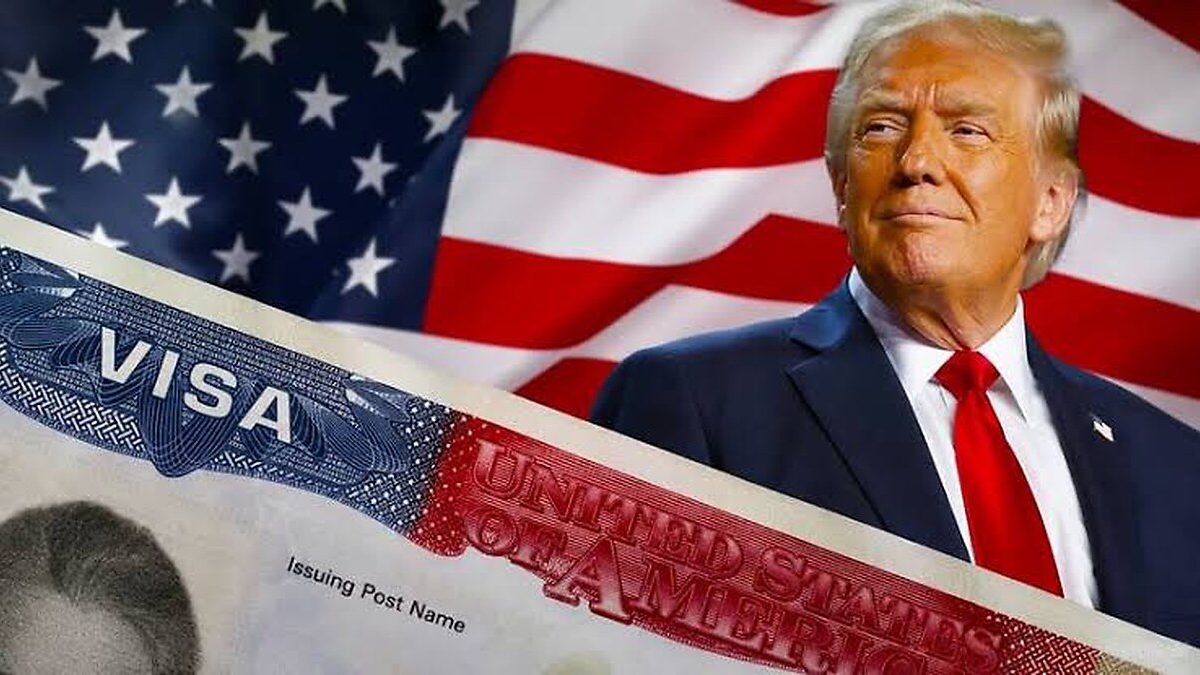
The cheapest part of a US tour is the flight
The paperwork to stand on an American stage used to cost a British comic $460. Since April 2024 the petition fee alone has run to more than $1,615 per artist, the Associated Press reported. That’s before anyone has booked a flight, a sofa to sleep on, or argued about a door split. Comedians don’t get their own lane for this. They go in on the same O-1 and P-1 visas as touring bands and circus acts. The firms that file these applications, like Entertainment Visa, advertise that they’ll submit your “O-1 or P-1 visa to work in the United States as a comedian”. The O-1B is, in the wording of the arts resource Artists from Abroad, the “classification for aliens of extraordinary ability in the arts”.
There’s something quietly funny about a working open-mic act having to prove “extraordinary ability” to a consular officer in order to do eight minutes on airport security in a Brooklyn basement. But that’s genuinely the category. On top of the petition fee sits an asylum program fee of $300 to $600. It gets charged every time a petition is filed, according to the American Immigration Lawyers Association. These aren’t visa fees a promoter swallows for you. They land on the act, or on whoever’s daft enough to sponsor them.
A $250 fee with no till to pay it into
Then there’s the new one. Written into last year’s US budget law is a Visa Integrity Fee, set at $250 and bolted on top of every existing charge. It’s payable on nearly every type of non-immigrant visa. In theory it’s refundable – you get it back if you leave the country on time and break none of your visa conditions. The Alliance for International Exchange, which tracks this stuff for the cultural-exchange sector, says the fee is in the bill but that the timing is a mess. There’s no October date in the text, and “We have not heard any official updates from the Department of Homeland Security (DHS) on implementation timing or process.” Collection hasn’t actually begun.
So British comics are being told to budget for a $250 charge that nobody can tell them when to pay, into a till that isn’t open yet. It’s refundable through a process that doesn’t exist. Beyond Border Global, which advises travellers on the fee, notes that in practice the refunds are rare. It’s the worst version of a pub cloakroom deposit. You hand over the money, and getting it back depends on a system nobody’s built. Add it to the visa fees already stacked up and the line on the budget before a single ticket sells just keeps growing.
Eight months to hear yes or no
The money is only half of it – the wait is what actually kills a tour. Processing times have ballooned to the point where you can’t plan around them – the AP found that the California service centre’s turnaround stretched from two-to-four months out to eight, while Vermont went from one month to three. You can pay to skip the queue, but premium processing costs $2,805 for a 15-business-day decision, per AILA, and that’s a separate cheque again.
Matthew Covey, executive director of the artist-visa non-profit Tamizdat, put the bind plainly to the AP: “Nobody’s filing petitions long enough in advance to sustain an eight-month delay,” and “You got a 50/50 chance of it being done in a reasonable amount of time or having to pay an extra $2,800 to expedite it.” For a headliner with an agent and a tour accountant, that’s an annoyance. For a mid-level act booking their own dates off the back of a good Edinburgh run, a coin-flip on whether you’ll be allowed into the country in time is a reason to not bother at all.
“It’s just more expensive than ever to try and do a tour in the U.S.” – Jen Jacobsen, executive director of the Artist Rights Alliance, speaking to the Associated Press.
None of that makes it into the tour announcement. The fees, the asylum charge, the integrity fee, the expedite cheque – on a short club run they can eat the entire margin before you’ve sound-checked a single room. The thing UK acts know in their bones, that a sold-out 80-seater barely clears the petrol, becomes brutal arithmetic once the visa fees are the size of a week’s takings.
Some acts have stopped bothering
Covey told the AP he’s hearing it more and more: “I’m hearing more and more frequently from artists who are just like, ‘I’m going to take a break from the U.S. for a while’.” It’s the bookers and agents who send British comics across the Atlantic who clock that first. The US has always been the prize gig – the Disney and Netflix money is real, and a name like Jack Whitehall can tape a stand-up chat show for Disney+ precisely because the machine around him absorbs all this paperwork without him noticing. The acts who feel the visa fees are the ones a rung or two down, the circuit headliners who’d have done a fortnight of US clubs to test material and come home with a story.
You can see why a lot of them are looking closer to home, or at least at gigs where someone else handles the admin. A boat that pays you to do a £1,052 week at sea doesn’t ask you to prove extraordinary ability to a consular officer. The same comics weighing a US run this summer are the ones the Live Comedy Association is trying to keep solvent at home, having spent June telling fans to email their MPs about a £1bn sector. And after Edinburgh – where a funded Fringe run still comes with a 60% profit share – the maths of crossing the Atlantic gets compared against simply doing it all again in a Scottish basement, where at least the only thing trying to keep you out is the parking.
None of this is a ban. Comedians are still getting O-1s and P-1s and selling out US theatres. But the next time a British act tells you they’re “looking at America for the autumn”, ask them whether they’ve filed yet, and watch their face. The flight’s the easy part. The hard part is a $250 charge with no working till, sitting on top of a petition fee that’s tripled, waiting on a service centre that might get back to you in eight months.
