
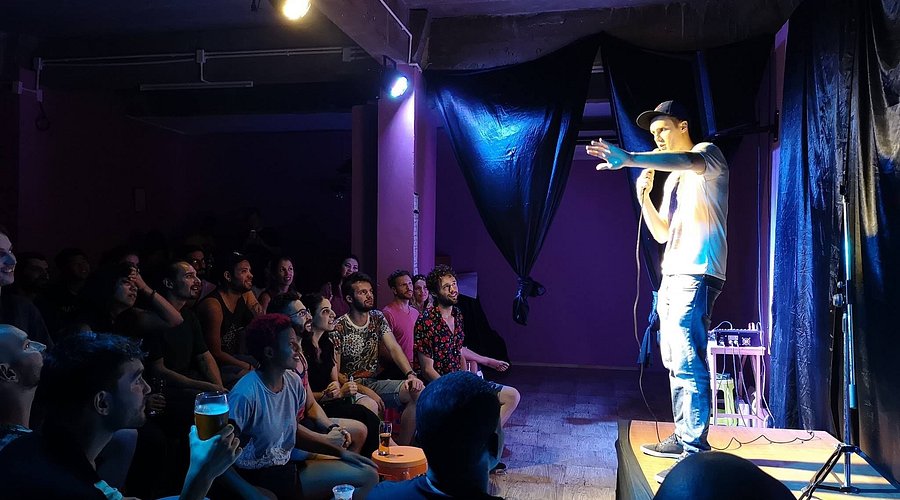
You’ve done fifty open mics. You kill most of them. Your friends laugh. Random audience members come up after and say, “That was great, man.” So why isn’t your phone ringing with booking offers?
The gap between crushing open mics and landing actual paid work isn’t talent—it’s strategy. Most comedians skip the invisible middle steps and then wonder why they’re still grinding unpaid slots two years later.
Here’s what actually works.
Open Mics Won’t Get You Booked
Let’s be honest about what open mics are: they’re essential training grounds, not pathways to paid work. You absolutely need them. But here’s the thing most people don’t realize—many venue owners don’t pay attention to their own open mic performers. They just want bodies on stage and tickets sold. Some of them notice great comics. Most don’t care.
Open mics are where you develop material and get stage time. They’re not where you network with the people who actually book paid shows. Those are different circles entirely.
Build a Tight, Showcase-Ready Set
Before anything else, lock in 10-15 minutes of genuinely strong material. Not “I killed at the open mic last week” strong. I mean the kind of set you could perform at a professional show and nobody would feel robbed by.
Here’s what most comedians get wrong: they overestimate how tight their material actually is. Your 10-minute set needs to be crafted, tested repeatedly at open mics, and refined until every joke lands and every transition feels natural. Dead weight gets cut. This usually takes 6-12 months of serious work, depending on how often you perform. Speed matters less than quality.
Get Film. Yes, Right Now.
You need footage. A solid 5-minute clip, minimum. Shot well enough to look professional (not phone video from a dark basement with bad audio).
This is where most comedians stall. They wait until they have a “real booking” to film themselves. But that’s backwards—you need proof of work to get real bookings. The loop closes like this: ask a comedy friend to film you at an open mic with decent lighting, hire a local videographer for cheap, or spend $100-200 on a basic camera setup yourself. Promoters and venue owners want to see what you sound like on stage before they commit to booking you. Your verbal description doesn’t count. Footage does.
Know What Paid Work Actually Looks Like
Not all paid gigs are the same. Here’s what’s out there:
Feature spots at established venues run 20-30 minutes and pay $50-200+ depending on the venue and your experience level. These usually come through word-of-mouth or agent networks.
Show features at festivals, themed nights, or private events vary widely but can pay $100-500+ once you have some credits.
MC duties at open mics or bar shows typically pay $25-75 and serve as a good entry point once you have some stage credits.
Private bookings for corporate events or parties can pay significantly more but require an established reputation.
The typical progression is: MC work first, occasional features, then regular features, then eventually headliner gigs. Skip steps and it shows.
Network Outside the Open Mic Bubble
This is the shift that matters. You need to meet the actual decision-makers: promoters, venue owners, established comedians with booking power, talent buyers at clubs.
How? Go see comedy shows—real shows where professional comedians perform. Not open mics (you’ve done that). Talk to the promoter afterward. Introduce yourself. Mention you’re developing material and would love to connect about opportunities eventually. It’s simple, which is probably why most comedians skip it. They stay in the open mic bubble with other comics trying to break in. Promoters rarely show up there.
Join comedy communities online where booking decisions actually happen. Threads, Slack communities, industry groups. Contribute meaningfully. Be a real person, not someone constantly asking for gigs.
Pitch Strategically, Not Broadly
Once you have footage and have started real relationships, pitch. Not mass pitching—targeted pitching.
Research venues. Find promoters booking comedians at your level. Look at their recent lineups. See if there’s a fit. Then pitch directly with your footage, your bio, and a specific note about why their venue matters to you.
Bad pitch: “Hi, I’m a comedian. I’d love to perform at your venue.”
Good pitch: “Hi, I noticed your Thursday show featured observational material. I’ve got 15 minutes of tight material in that style. Here’s my reel and three upcoming shows you can catch me at. Let me know if there’s a fit.”
Specificity shows you’ve done homework.
Build Credits and Social Proof
As you land features, you build credits. These matter. Venue owners want to know who else has booked you. It validates you’re at a certain level.
Document your gigs as you go: venue names, dates, photos, video clips. Build a resume. Also, build an audience on social media if you’re serious about this long-term. You don’t need 10k followers—1-2k engaged followers shows people actually like your comedy. Some promoters check.
Know Your Rate and Don’t Undercut
Once you’re getting booked, don’t take less than you’re worth. If venues are paying you $75 for a feature, don’t accept $50 because someone asks. Rates matter for your career trajectory.
New comedians sometimes accept anything just to get the credit. Fair enough early on. But after 20-30 paid gigs, your rate should reflect your experience. Most feature performers at established venues get $75-150 depending on market. Headliners land $200+.
For a detailed breakdown of rates by market and experience, check our guide to comedy pricing.
The Real Timeline
This whole process usually takes 18-36 months from first open mic to regular paid features. Not because you’re not funny. But because the infrastructure requires it. You need good material, proof of work, real relationships, and credits. Accept that. It’s not unfair. It’s just how it works.
Where to Start
If you’re ready to start getting booked, Open Comedy’s listings have thousands of shows and promoters looking for performers. You can also search for comedians and promoters in your region to see who’s booking.
FAQ
Q: How many open mics before I try for paid work?
A: At least 50-100. You need genuinely tight material. Rushing this is a mistake. Quality beats credits.
Q: Should I pay to enter comedy festivals?
A: Depends. Established festivals with real industry presence are worth it. Small pay-to-play festivals usually aren’t. Research first.
Q: Does being funny at open mics mean I’ll be good on a real stage?
A: Not always. Open mic audiences are comedians and comedy fans. Real audiences are different. Your material needs to work for both.
Q: What if my area isn’t booking new comedians?
A: Travel if you can. Start an open mic yourself if the infrastructure doesn’t exist. Harder, but possible.
Q: What’s the actual cost to get started?
A: Almost nothing for open mics. Once you want paid work, budget for decent footage (videographer or camera rental, $50-200). After that, mostly travel and time.
Are you a comedian looking for gigs?
Join Open Comedy — the free platform connecting comedians with bookers and venues worldwide. Find open mic nights, paid spots, and festival opportunities.